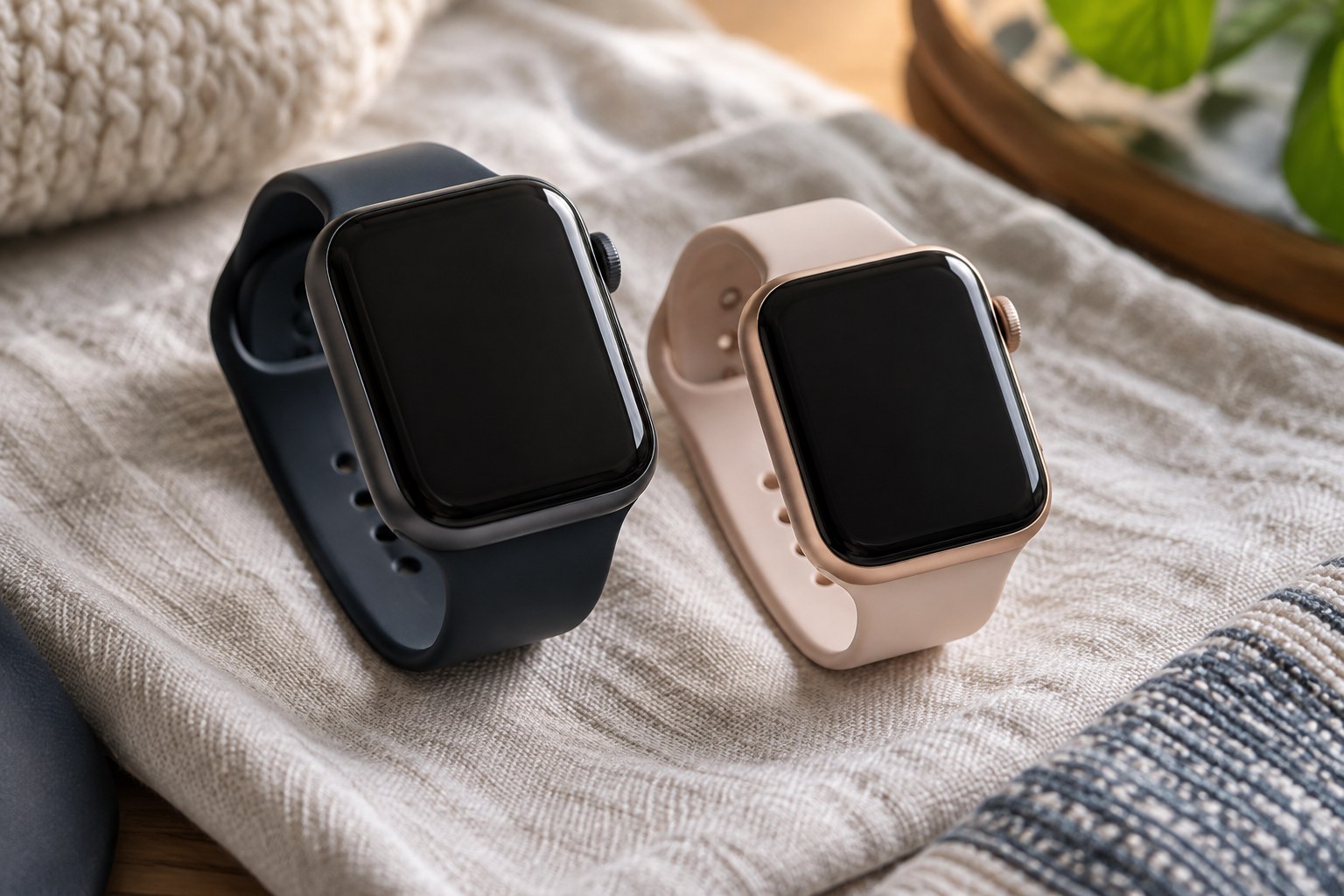
Before shopping for a smartwatch, write down three tasks you would regularly use it for. These might be discreet notifications, a cooking timer or recording a running route. Specific tasks make optional features easier to assess. Something that sounds interesting for an imagined occasion does not have to determine the purchase.
First check the connection to your existing phone. Apple, for example, publishes compatibility information linking Watch models, iPhones and software versions. Consult equivalent current information for other manufacturers. The presence of a companion app in an app store does not answer every question about notifications, calls or settings. Check the particular functions on your list individually.
Everyday use rather than a demonstration
A bright shop floor cannot show every situation in which you will use the watch. Consider text legibility, control size and whether you need physical buttons when wearing gloves or handling the device with damp hands. If possible, try the case with the intended strap. Its weight feels different when your arm rests on a desk or a jacket cuff covers the watch.
Think about when charging can happen. Wearing a watch both during the day and overnight requires a dependable charging opportunity. Compare manufacturer battery claims only with their stated conditions in mind. An always-on display, location tracking and other features may represent different usage profiles. Include an additional compatible charging accessory in the budget if you regularly move between two homes.
A mobile connection is a separate decision. Check whether you need to remain reachable without your phone, which providers are supported and what recurring charges apply. A cellular model provides no automatic benefit when your phone is always in your pocket. Additional app subscriptions and paid training plans also belong in the total cost rather than disappearing behind the hardware price.
Treat health displays as functions with documented limitations, not as a general replacement for medical assessment. For the purchasing decision, first ask whether you understand the information and would actually review it. There is no need to collect the longest possible sensor list simply because it is available.
By the end of the comparison, you should be able to name a real use for every more expensive feature. If only the basic tasks remain, compare simpler watches as well. Money retained for another need may be more useful than a feature package that sits unused after the first week. A short list also makes it easier to revisit the decision when your phone or routine changes.