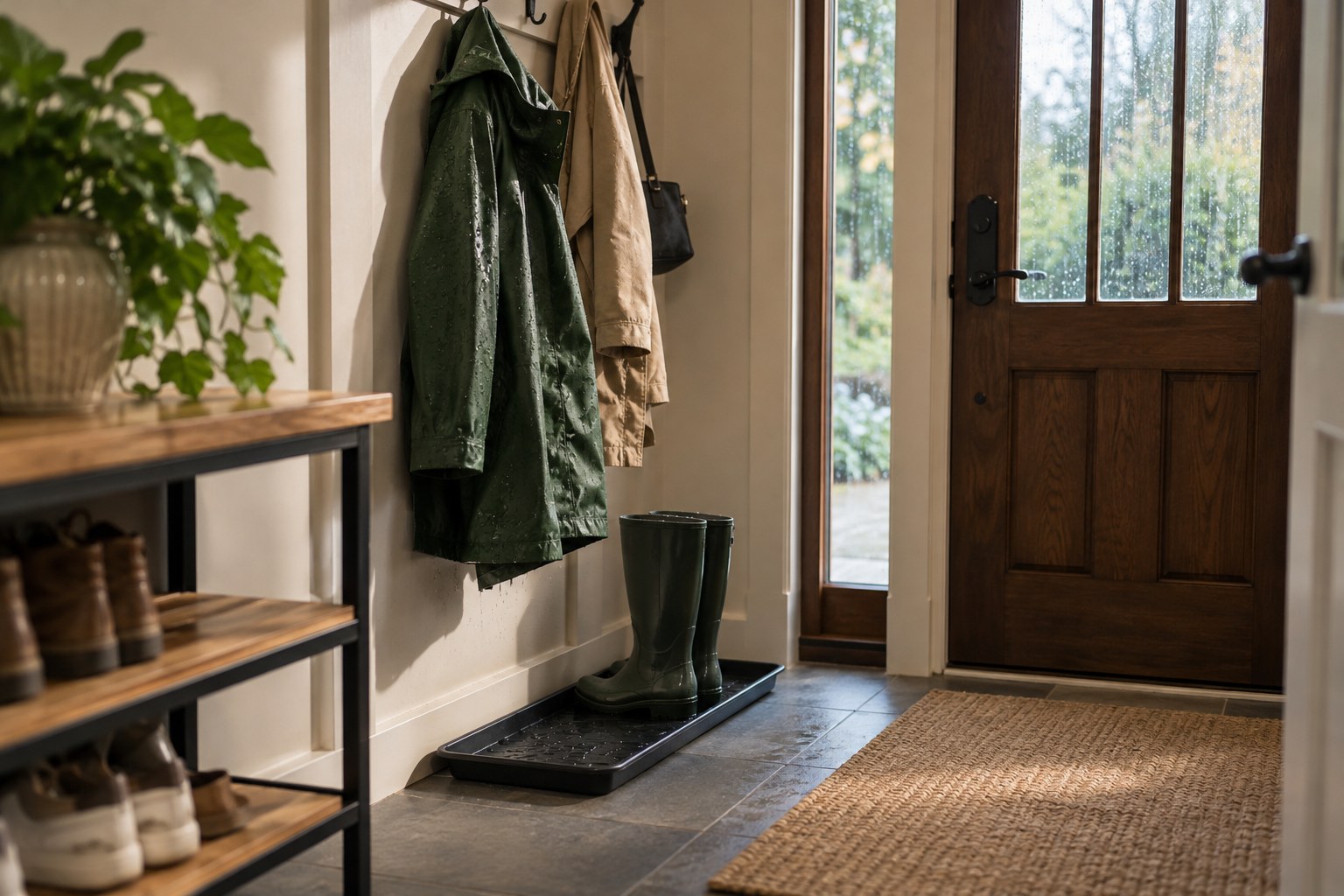
An entrance often has several jobs in a small area. Shoes are changed, coats removed and bags put down briefly. A large storage unit can create more difficulty than it solves if it reduces movement space. Observe what actually happens when people arrive home first.
Which objects remain there, and which are moved elsewhere later? A bag placed down for a few minutes does not require a permanent large drawer. Daily shoes do need an accessible place that does not have to be cleared each time.
Preserve doors and walking routes
Mark the door's opening area and regular routes. Include opened cupboards or tilted shoe compartments. A unit may be shallow when closed yet obstruct the passage in use.
Check fixing, loading and assembly requirements for the selected product. A tall narrow shoe cabinet is not automatically suitable without additional restraint because its footprint is small. Follow the exact instructions and establish the wall material before purchase.
Distinguish wet and dry belongings
A wet coat needs a place compatible with its care requirements. Allow the necessary space rather than assuming a tightly filled closed compartment suits every situation. Shoes may benefit from an appropriate mat or tray where it suits both the floor and intended use.
Measure the largest regularly used footwear. A compartment for flat shoes does not automatically hold boots or wide work shoes. If seasonal items are stored elsewhere, the entrance need not accommodate the whole year's collection.
Give small objects a defined place
Keys, post and other small items need a clear location without occupying every surface. A modest dedicated tray may be enough. Check that it can be reached in the ordinary movement without catching on coats or bags.
After trying a temporary arrangement, assess the storage size actually needed. Existing hooks or a suitable small shoe rack may already cover part of the task. Buy the missing function rather than automatically adopting a complete entrance furniture set. A useful hallway supports daily actions while keeping the necessary space available for them.