A balcony planter can look compact in a shop yet occupy an important part of a small outdoor space at home. Compost, plants and water also change the weight that must be considered. Plan the location and suitable support before the plant selection drives the purchase.
Start with the balcony's available area. Sketch door movement, seating and necessary routes. A planter needs to work not only in a still photograph but also while windows are open, plants are watered and furniture is used. Preserve required access and applicable safety conditions.
Separate outside size from planting space
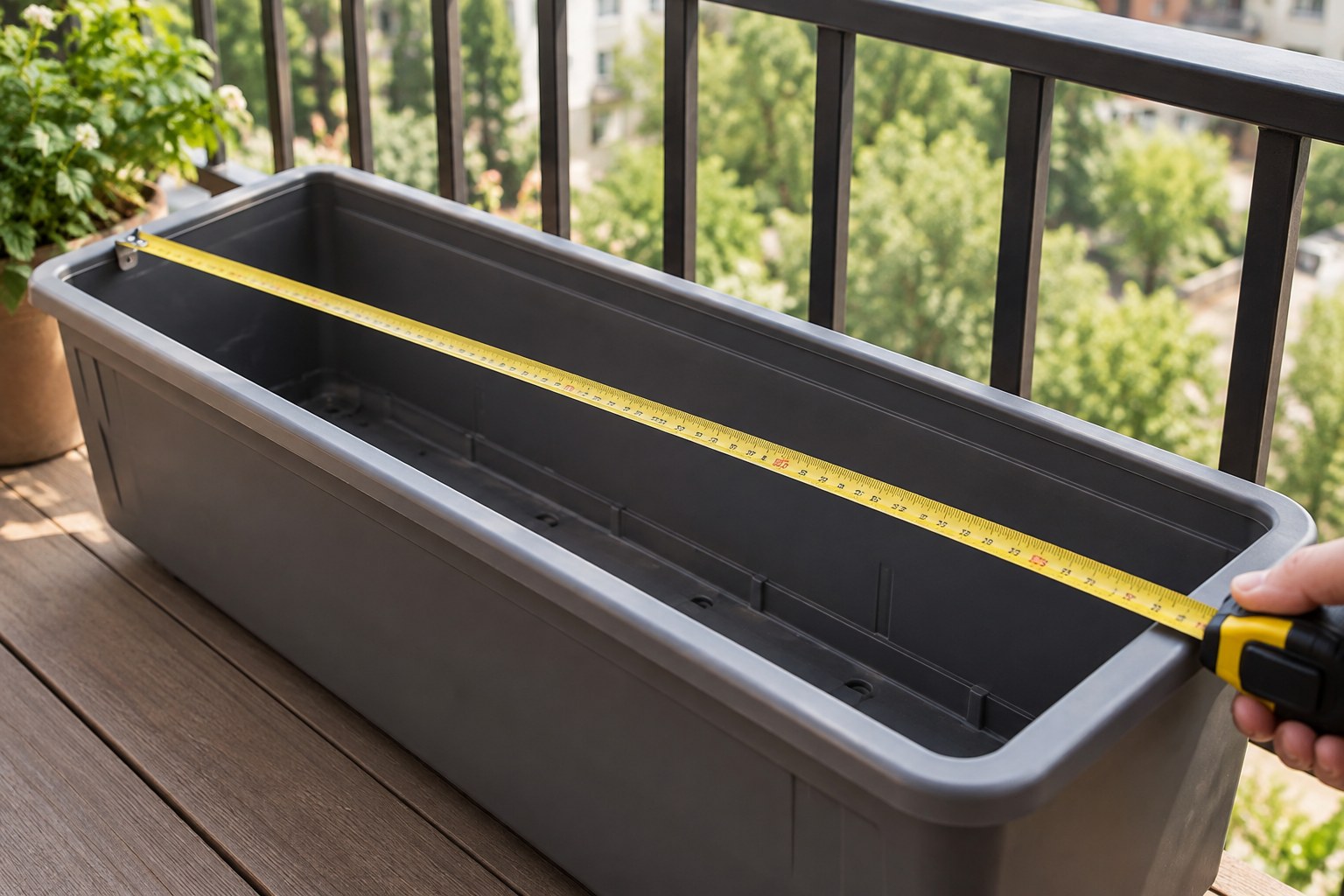
Advertised dimensions may describe the outer rim. Thick walls, a reservoir or an insert can reduce the usable interior. Check internal measurements or stated usable volume where those affect the planned planting.
Compare length, width and depth together. A long shallow box does not provide the same conditions as a shorter deep container. Establish the actual requirements of the selected plants. Avoid buying as many plants as possible first and only then trying to distribute them through the available space.
Resolve support and fixing
For railing attachment, planter, bracket and railing must be compatible and intended for that use. Measure the relevant railing sections and read the installation requirements. A similar-looking bracket in a photograph is not proof of compatibility.
Account for the complete load and conditions at the location. Where the balcony or its components' permitted use is uncertain, clarify it with the property owner or an appropriate professional. This article provides neither a universal load figure nor approval for improvised fixings.
Floor-standing containers also need suitable support, weight consideration and movement space. A very large planter may be difficult to move once filled. Consider how cleaning and access behind it will remain possible. Do not base handling plans on the empty container when normal use will be with it full.
Include drainage and access for care
Check how the container drains or operates its designed reservoir according to its instructions. Excess water should not flow unexpectedly onto surfaces or neighbouring areas below. Establish an appropriate solution for the location rather than improvising plugs or holes afterwards.
Can every plant be reached from a safe standing position? A box that requires risky leaning to maintain is poorly located. Any filling point or water-level indicator also needs to remain accessible during intended use.
Plan the complete purchase
Suitable brackets, inserts, trays and growing medium may be needed in addition to the container. Record these components and their confirmed dimensions together. A low box price without required accessories is not a complete comparison.
Check whether the existing watering can or another appropriate tool can be used in the selected position. If each watering creates obstacles, revise the arrangement before planting. Testing the empty system may help where the sales conditions permit, but it does not replace structural or safety assessment.
Try the layout before adding plants
Before filling, use the empty suitable system to assess access. Open the balcony door, place the usual furniture and walk through the intended care routine. This checks space and operation; it is explicitly not a load test of a bracket or the balcony structure.
Record difficult-to-reach locations. The planter might cover an existing socket, interfere with seating or be awkward to inspect from the inside. Resolve those conflicts through another suitable position or design before a filled container becomes difficult to move.
If several planters are intended, review their combined arrangement. Individually suitable dimensions do not automatically produce a workable balcony. Supports, clearances and access can interfere with one another. A sketch containing all planned elements makes those overlaps visible and helps match plant quantities to the space actually available for appropriate use. It can also reveal that fewer containers would provide a more manageable arrangement without abandoning the planting project.
Choose plants within the established limits only once dimensions, installation and care access work together. The result should be an outdoor arrangement that remains manageable in ordinary use, rather than one that merely looks attractive on purchase day.