A washing machine can appear to fit its space in a product listing and still project too far into the room after delivery. Connections, the handle and the open door are often missing from a first measurement. A simple drawing is more useful than assuming that a nominal standard width settles the question.
Measure the finished space
Check the free width at the bottom, middle and top. Skirting, an uneven wall or a neighbouring cabinet can create a narrower point. Measure height from the finished floor to the lowest underside of the worktop. Do not plan to improvise a height adjustment with loose materials afterwards. The installation instructions determine what support and positioning the particular machine allows.
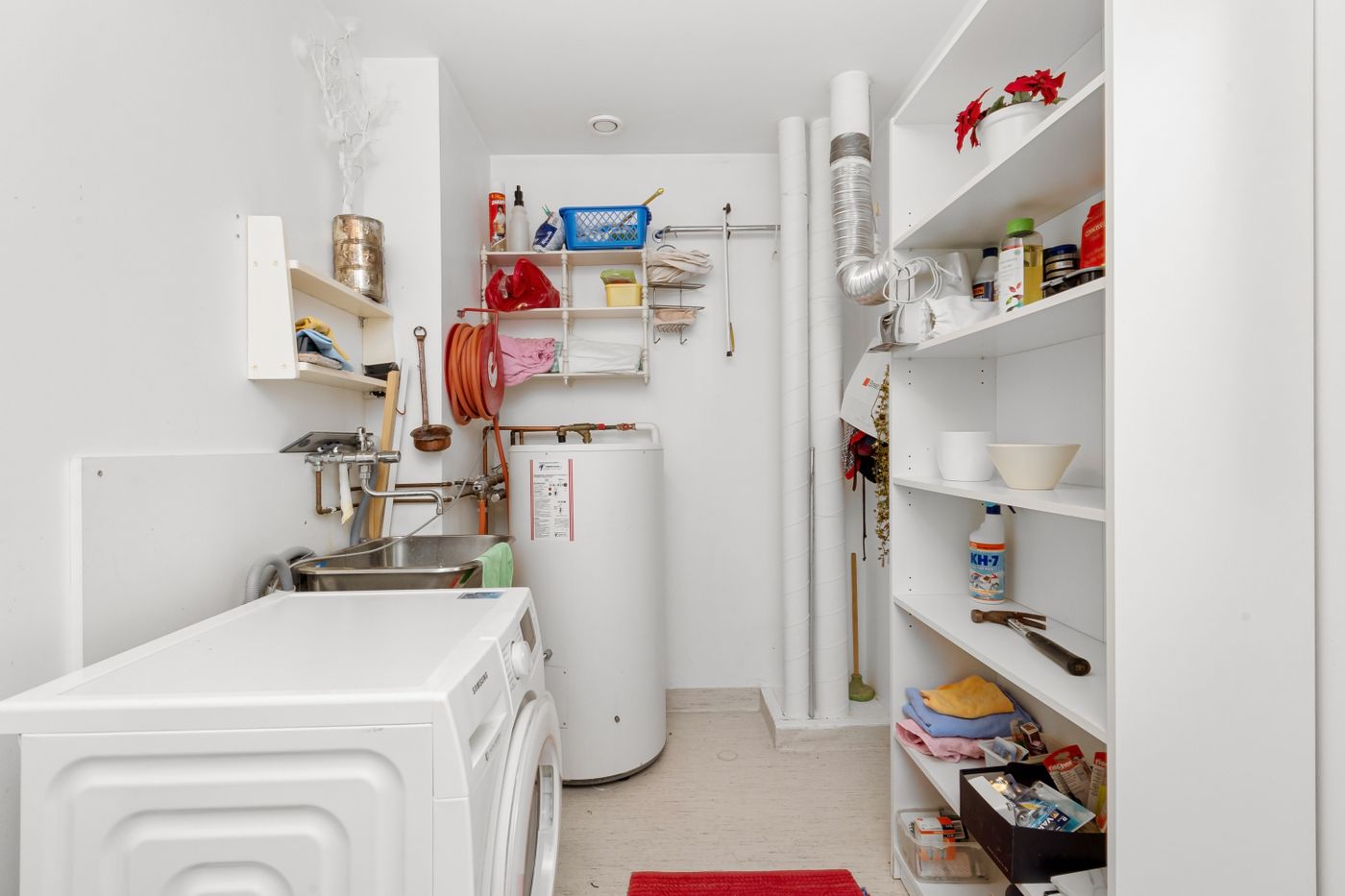
Depth must include more than the metal cabinet. Mark the tap, drain and socket on your drawing, then consult the installation diagram for the intended clearances and hose routes. Bosch's installation guide, for example, illustrates connections and hose positioning; its dimensions do not automatically apply to another appliance. A sharply bent hose is not a remedy for insufficient space behind the machine.
Leave room to use it
Mark the open door area on the floor with removable tape. Is there space for a laundry basket and for someone to reach the drum? Check whether an opposite cupboard can still open. With a top-loading machine, the important extra clearance is above the lid. A machine that fits with everything closed may still be inconvenient every wash day.
Consider routine access as well. Locate any user-accessible filter or other maintenance points in the manual. Having to move a heavy cabinet whenever maintenance is due is an avoidable nuisance. The water shut-off and electrical connection also need the access required by the installation conditions. Do not cover an awkward arrangement with decorative panels before resolving it.
Trace the delivery route
Compare the packaged dimensions with the entrance, lift, stairs and final doorway. Turning a corner can be harder than passing through a straight opening of the same width. Ask the delivery service whether it carries the appliance to the intended room, what obstacles its service excludes, and whether unpacking before a tight opening is permitted. Do not assume you can safely remove a door or fitting at the last minute.
Keep photographs, measurements and the exact model number together. Ask the retailer or installer to confirm unresolved points before ordering, especially for built-in furniture fronts or unusual plumbing. If a machine only fits on the assumption that somebody will somehow force it into place, choose another model. A modest change in drum capacity is usually easier to live with than a permanently obstructed room.
Test the measurements against two candidates
Place two installation drawings side by side and mark their differences. Both machines might have the same nominal width while one door projects farther or one connection sits less conveniently. Transfer those differences to the room sketch. You are then comparing two actual installations rather than merely two specification tables.
Consider the eventual user too. Can they fill detergent, read controls and open the door with the laundry basket in its usual position? A recess can be sufficient for installation yet awkward for everyday loading. This does not require invented ideal ergonomic dimensions, only a careful assessment of the existing room.
Mark unresolved points explicitly and ask the retailer or installer to describe the required solution. Once its cost and consequences are known, the appliance can enter a fair price comparison. Necessary alterations are part of acquiring the machine and should not disappear from the calculation afterwards. Keeping this distinction visible also makes competing delivery and installation offers easier to understand.