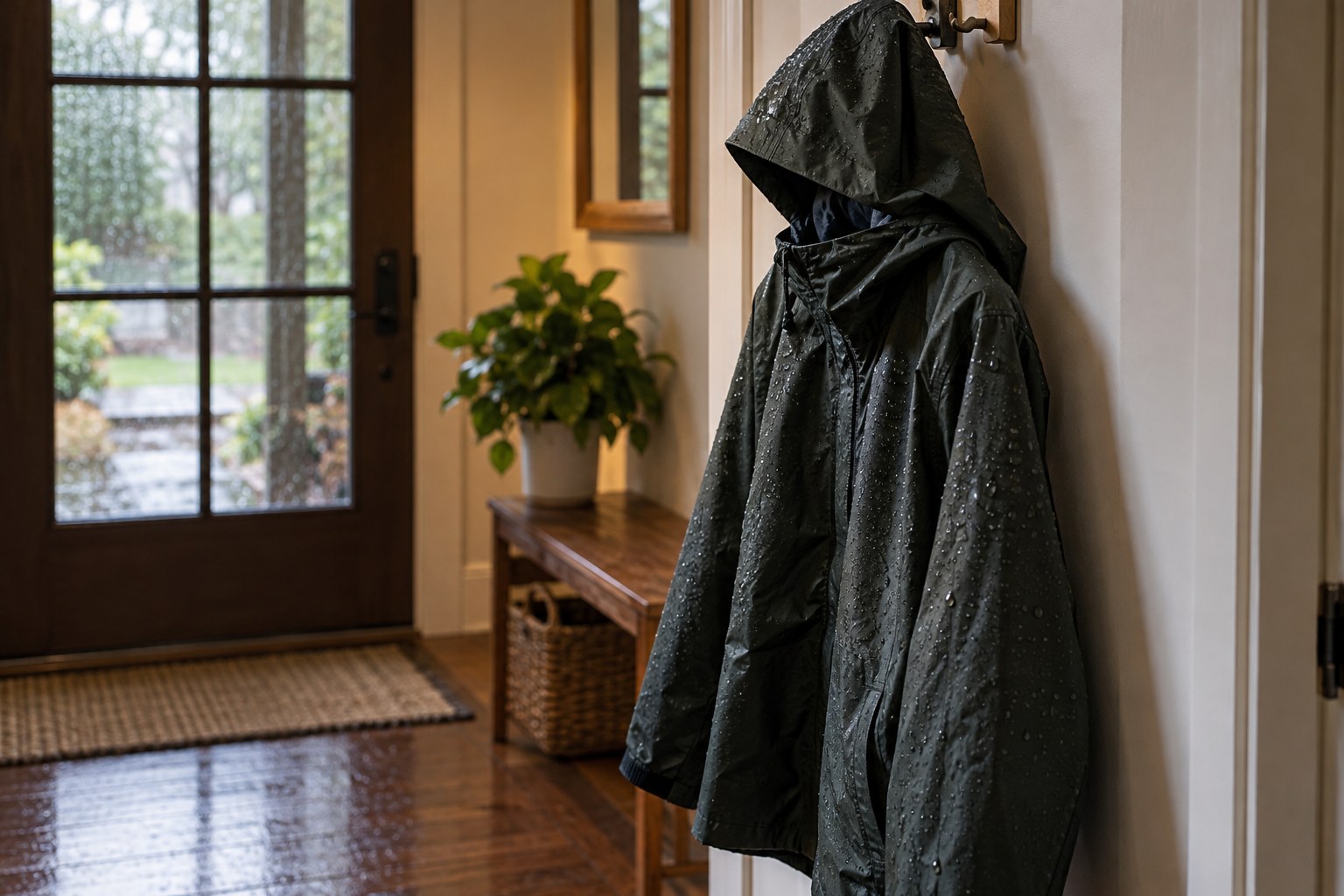
Ten minutes from the station to home is a different use from an entire afternoon outdoors. Yet rain jackets are often compared using the same impressive-looking specifications. Start instead with duration, activity and the clothes underneath. Record whether you mainly walk, cycle, wait for a bus or plan longer leisure outings.
For a short journey, an easily packed extra layer may be sufficient if it is intended for the expected conditions. Longer periods outside put more emphasis on coverage around the hood, sleeves and hem. During activity, accessible ventilation also matters. No single figure on a label describes comfort across all these situations.
Test the cut while moving
Try the jacket over the layers you will actually use. Raise your arms, reach forward and sit down. Notice whether the hem rides up or the shoulders pull. A jacket that fits while standing can behave differently under a backpack or when reaching handlebars.
The hood should adjust so that you can see comfortably and turn your head. Check whether you can use its adjusters with the gloves you expect to wear. If a helmet is involved, look for an expressly suitable design and try the combination. An oversized hood is not automatically versatile; without useful adjustment it can become an everyday nuisance.
Pockets belong in the fitting test too. Can you reach them when backpack straps cross the jacket? Can you retrieve a phone or keys without opening the front widely? Separate ordinary commuting preferences from requirements for special trips. An extra pocket need not serve both purposes equally well.
Use product information carefully
Read the intended-use description and care requirements. Water-repellent and intended for sustained rain are not interchangeable statements. Compare claims whose meaning and test conditions are understandable. Where important information is missing, ask rather than inferring performance from the price.
Consider zips, seams and protected openings according to the product description. A jacket is more than a sheet of fabric. You do not need to invent technical thresholds for the purchase; you need a clear explanation of whether the finished garment suits the task. During a sale, confirm that the information applies to the exact variant selected.
Care requirements can influence use. If a particular treatment is needed, check the specified products and costs. Do not add arbitrary laundry treatments merely because they were recommended for another outdoor item. Retain the instructions so that later maintenance follows guidance for your own garment rather than a similar-looking product.
Balance packed size against readiness
A tiny storage pouch helps only if it encourages you to carry the jacket. Check whether it fits alongside the other contents of your everyday bag. A more substantial jacket worn directly on rainy days may not need to fold particularly small. Consider which behaviour is realistic for you rather than paying for a feature you rarely use.
Finally inspect what you already own. Perhaps you only need an outer layer over an existing warm sweater. An additional heavily insulated rain jacket may then be unnecessary. A clear division of jobs between existing garments can save more than purchasing the most elaborate new clothing system. Write down the missing function before browsing, and use it to keep the comparison focused.