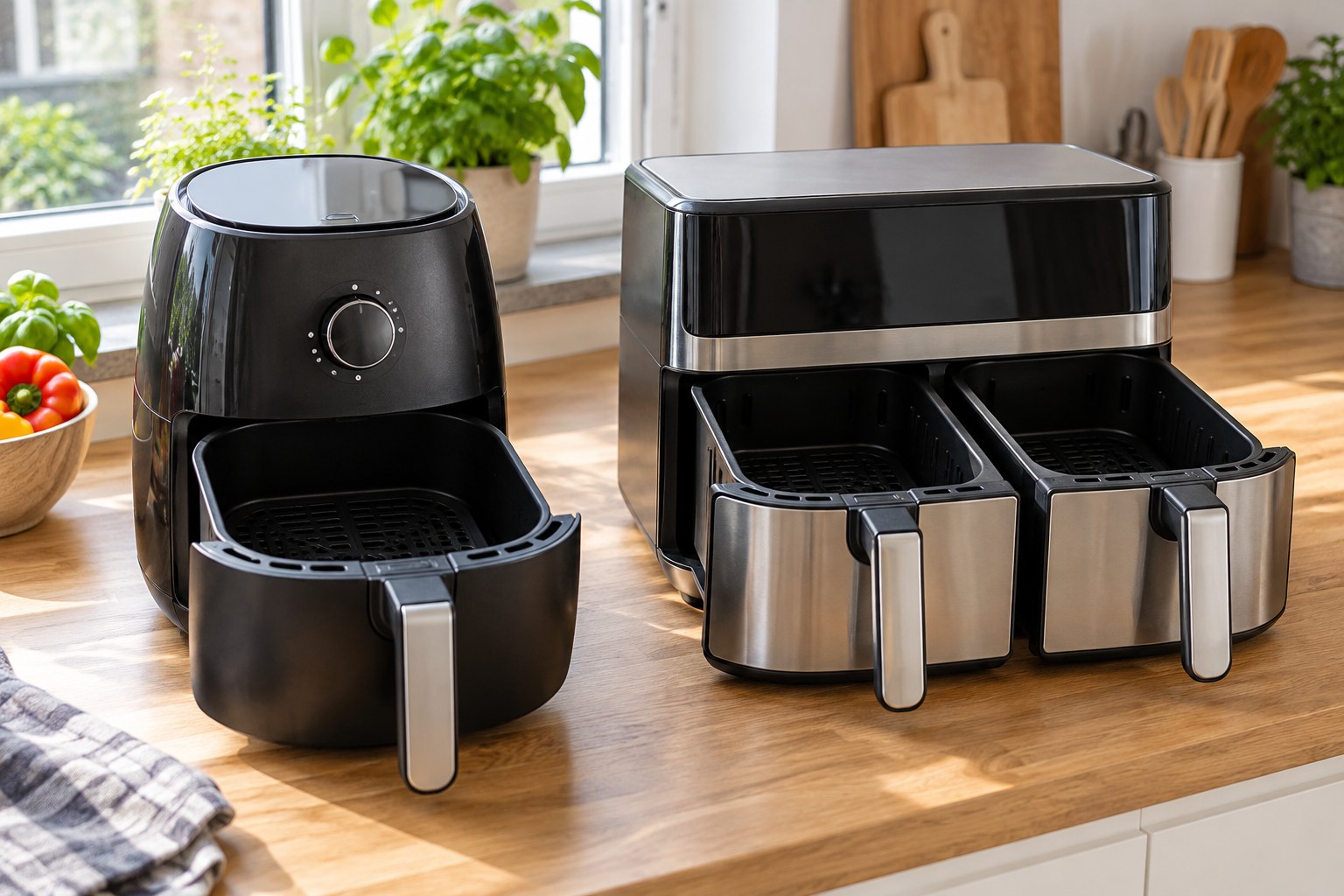
Two drawers look more versatile than a single basket. Whether they justify extra cost and worktop space depends on the meals. Someone regularly cooking one large component needs a different arrangement from someone combining two smaller items with different settings.
Translate a meal into usable area
Start with a typical dinner and list its components. Which should go into the appliance together, and which will still be prepared on the hob? Estimate the basket area each component requires. A litre figure describes volume rather than necessarily providing a usable layer of food. The manufacturer's loading instructions and recommended quantities remain the relevant limits.
Check the size of each individual drawer in a dual model. Combined capacity is of little help if a regularly used dish only fits a larger single basket. Conversely, separate compartments can be convenient when foods need different temperatures or durations and the machine genuinely permits independent settings.
For a small household, make a second check: would you frequently fill both drawers in an ordinary week? If you normally prepare one small portion, a large dual appliance may occupy unnecessary space. If two people regularly eat different meals, that separation may be precisely what improves the routine. Neither household size nor maximum capacity settles the question alone.
Understand coordinated finishing
Read what an advertised synchronisation function actually does. Some features coordinate starting times; others copy settings. A marketing name may mean different things across product lines. Find an example in the instructions resembling your meal and identify the settings you still need to enter yourself.
Even a coordinated programme may require turning or shaking food along the way. Consider whether you can reach both baskets comfortably and where they can be placed as instructed. A large appliance on a narrow worktop can lose the convenience its layout promised.
Plan unloading too. If one component finishes early, you need an appropriate routine rather than assuming the appliance can hold every food indefinitely without affecting the result. This is a kitchen-planning decision, not a blanket promise about cooking performance. The useful comparison is how the machine supports the meal you actually prepare.
Include the cleaning arrangement
Check which components can be removed and their required cleaning method. Two small baskets may fit your sink more easily than one large basket, but they may also create more individual parts. Compare actual dimensions and care instructions. Dishwasher-compatible accessories occupy space there that other dishes also need.
Investigate replacements for inserts, handles or baskets where these are offered as spare parts. Treat coatings and fittings according to the manufacturer's instructions. Do not buy arbitrary liners simply because their outside dimensions appear correct when their suitability for the appliance is unclear. Reusable accessories only help when they fit both the equipment and the cleaning routine.
Tie the premium to a recurring task
Compare two specific models by usable area, meals accommodated, independent controls, footprint, cleaning and purchase price. Do not invent electricity savings based solely on drawer count. A two-zone machine is justified when the zones regularly perform a useful job. If you mostly prepare one larger dish, an accessible single basket may be the more appropriate purchase. This keeps the decision focused on cooking arrangements rather than the largest number on the packaging.