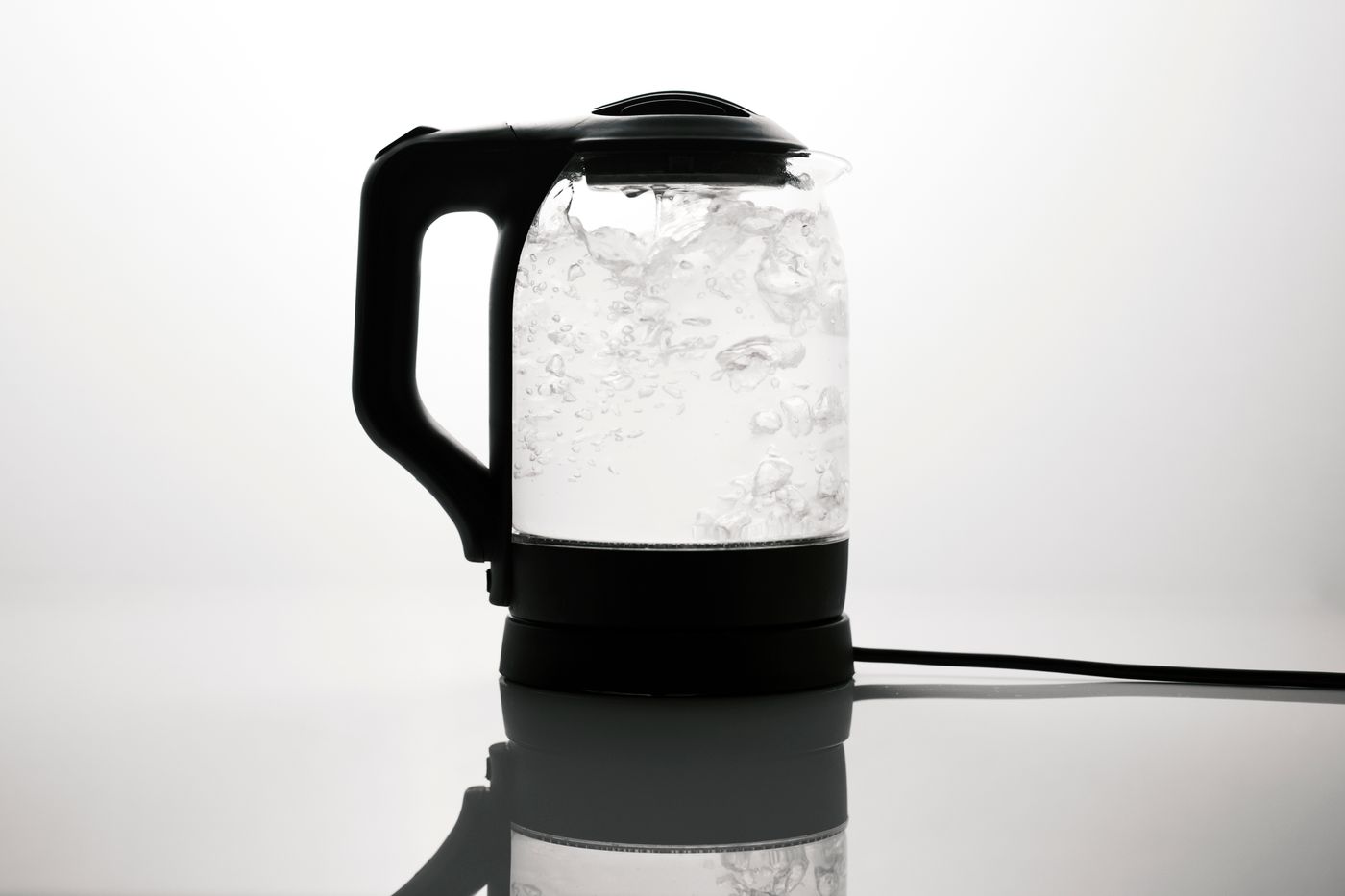
A large kettle does not need to be filled every time. For an economical routine, you need to see the required amount clearly and heat it within the permitted filling limits. Maximum capacity alone tells you little about that experience.
Match mugs with the minimum fill
Measure the amount your usual mug or teapot holds using a measuring jug. Compare it with the minimum fill mark on a shortlisted kettle. If one portion falls below that mark, you must follow the instructions and may need to heat more than you wanted. A smaller suitable model may be more convenient, but it still needs to accommodate the portions you regularly make.
Check whether the scale remains visible while you hold the kettle under the tap. A marking behind the handle can be difficult to read depending on your grip. That encourages filling by guesswork. A clear water level can be more useful than another display you rarely consult after switching the appliance on.
Consider weight and pouring
A filled kettle weighs more than an empty display sample. Decide whether you regularly want to lift its entire capacity. Inspect the handle, lid mechanism and filling opening. Pouring into a single cup should not require an awkward wrist movement. Manufacturer safety clearances and operating instructions still determine how and where the appliance may be used.
Check the base and cable arrangement in the actual position. A straightforward route to the socket is preferable to a cable crossing the work surface. Allow appropriate free space instead of wedging the hot appliance among other objects. Capacity is useful only when the kettle can be handled comfortably in its intended place.
Give additional functions a reason
Temperature selection can matter when you regularly prepare drinks with specific brewing instructions. If you only require boiling water, it may be unnecessary. A keep-warm function also deserves deliberate consideration. Will the next serving genuinely be needed soon, or would you leave it running through habit?
Compare machines against the same demand. A larger kettle makes sense when you frequently prepare a pot or several cups together. For single servings, readable low-volume markings and comfortable handling deserve more attention. Pay for a size that helps the routine, then fill within the permitted limits for the task at hand.