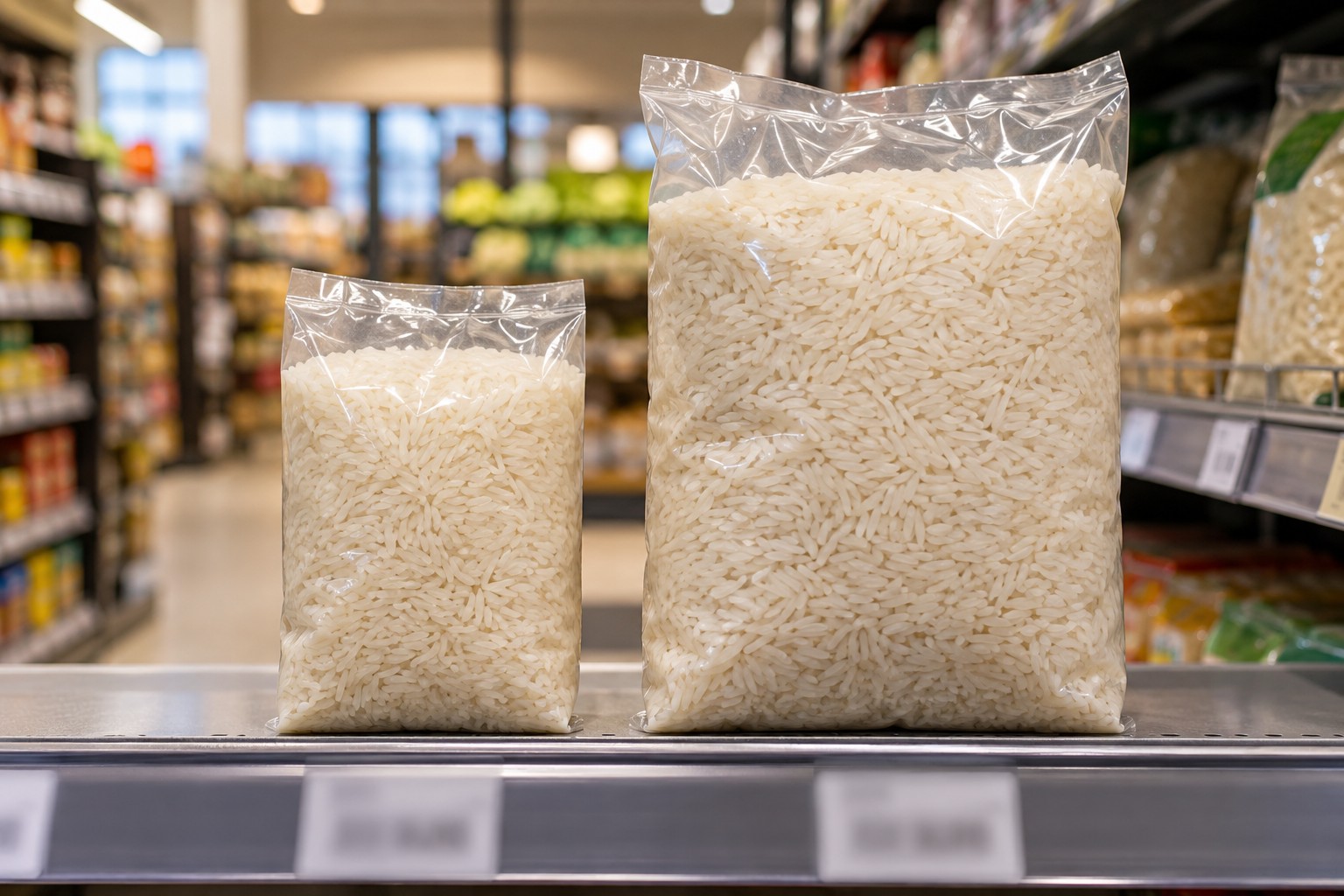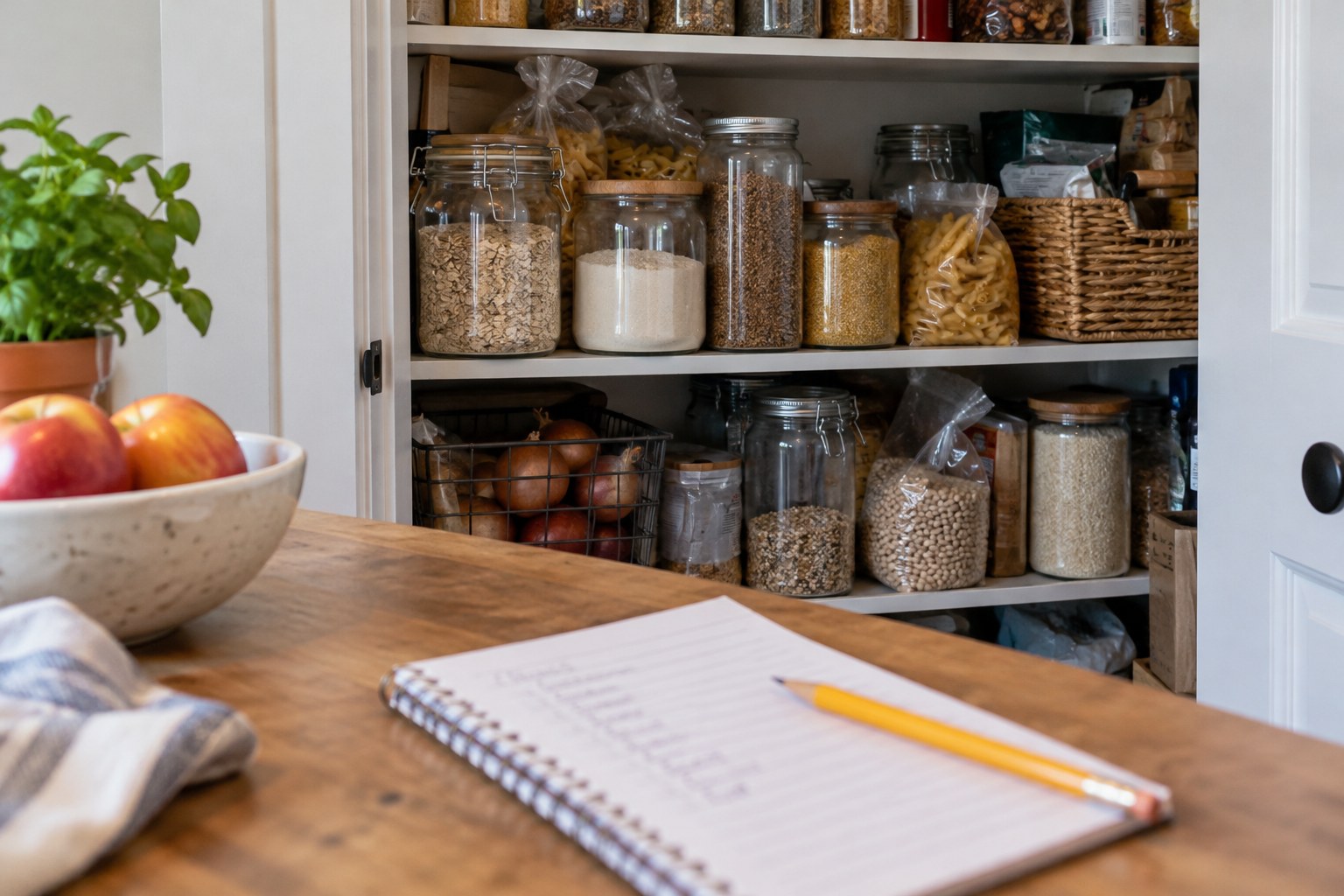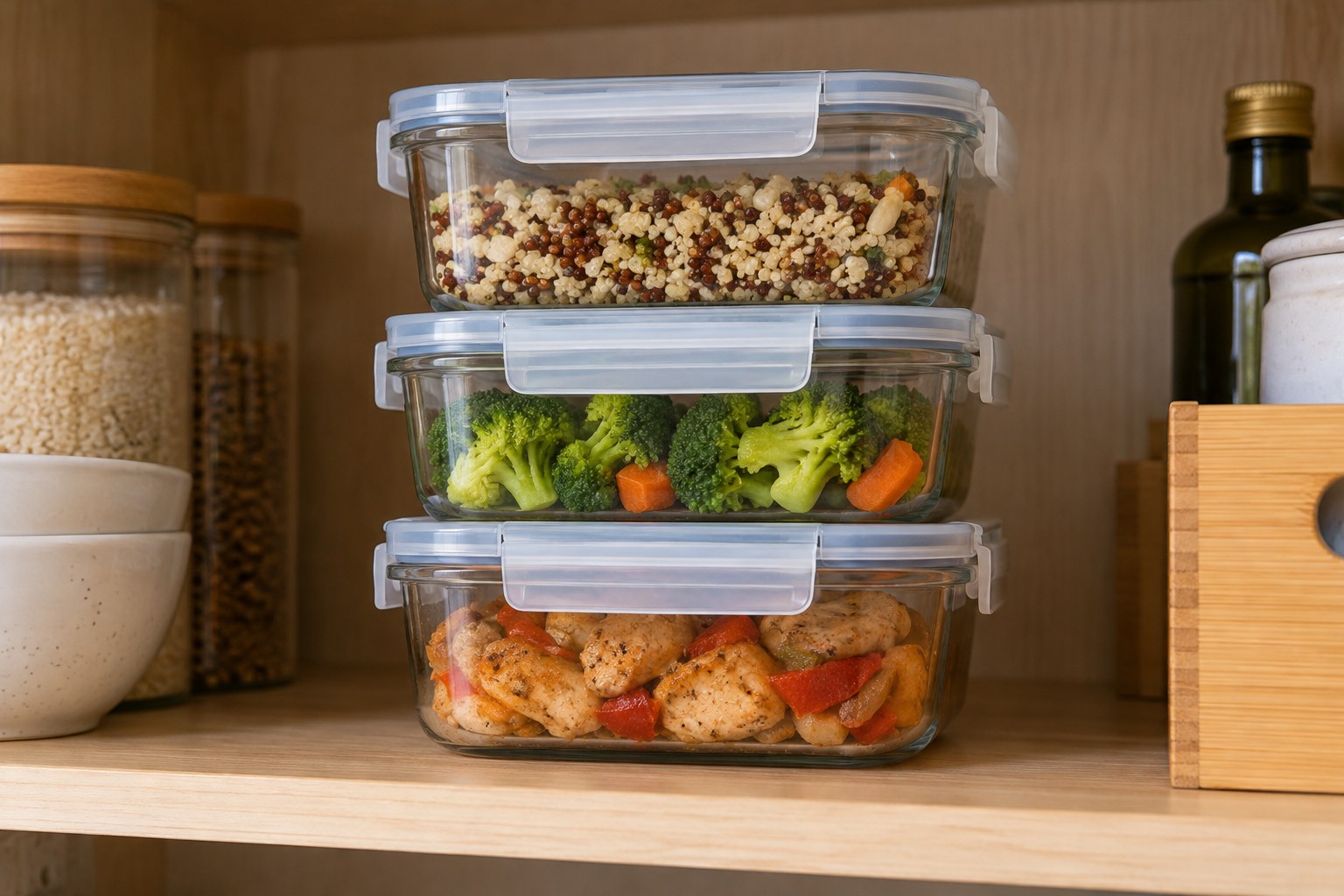
A container set looks orderly in a product photograph because every piece is arranged on an empty surface. At home, those same containers must work between shelves, drawer walls and existing supplies. Begin with the storage location and the food rather than the number of pieces included in a promotion.
Measure the usable width, depth and height. Allow for hinges, projecting fittings and the route used to remove a container. Something can fit mathematically while still requiring awkward tilting or both hands to lift it out.
Match shape to contents
List the main foods you intend to transfer regularly. Long pasta, flour and small quantities of spices need different shapes and capacities. Identically sized boxes are suitable only when the quantities suit them. A stated capacity in litres does not establish how neatly a particular packet of food will fit.
Plan for leftovers in the original package if a new pack will not fit completely. Otherwise, the container and an open bag may end up beside one another. That arrangement can be reasonable, but it should be anticipated rather than discovered after purchase.
Treat lids as separate components
Check how the lid and seal can be cleaned according to the instructions. Establish which parts are suitable for each intended use; the container material does not automatically give its lid the same suitability. Claims about hot food, freezing, microwaving or dishwashing must apply to the specific variant.
A shared lid size across several boxes can simplify matching. Conversely, a set with many almost-identical shapes becomes awkward when each lid fits only one container. Replacement lids or seals matter if the system is intended for long-term use.
With an unfamiliar range, start with a few appropriate sizes where possible. Put them in the intended space and simulate removing them while other supplies remain in place. Stacking is helpful only if the lower container you need can be reached without reorganising the cupboard.
Expand once the arrangement works. A small collection that is fully used is easier to keep clean and complete than a large set whose unused half disappears at the back of a cabinet. Count useful containers, not merely the pieces listed on the box.