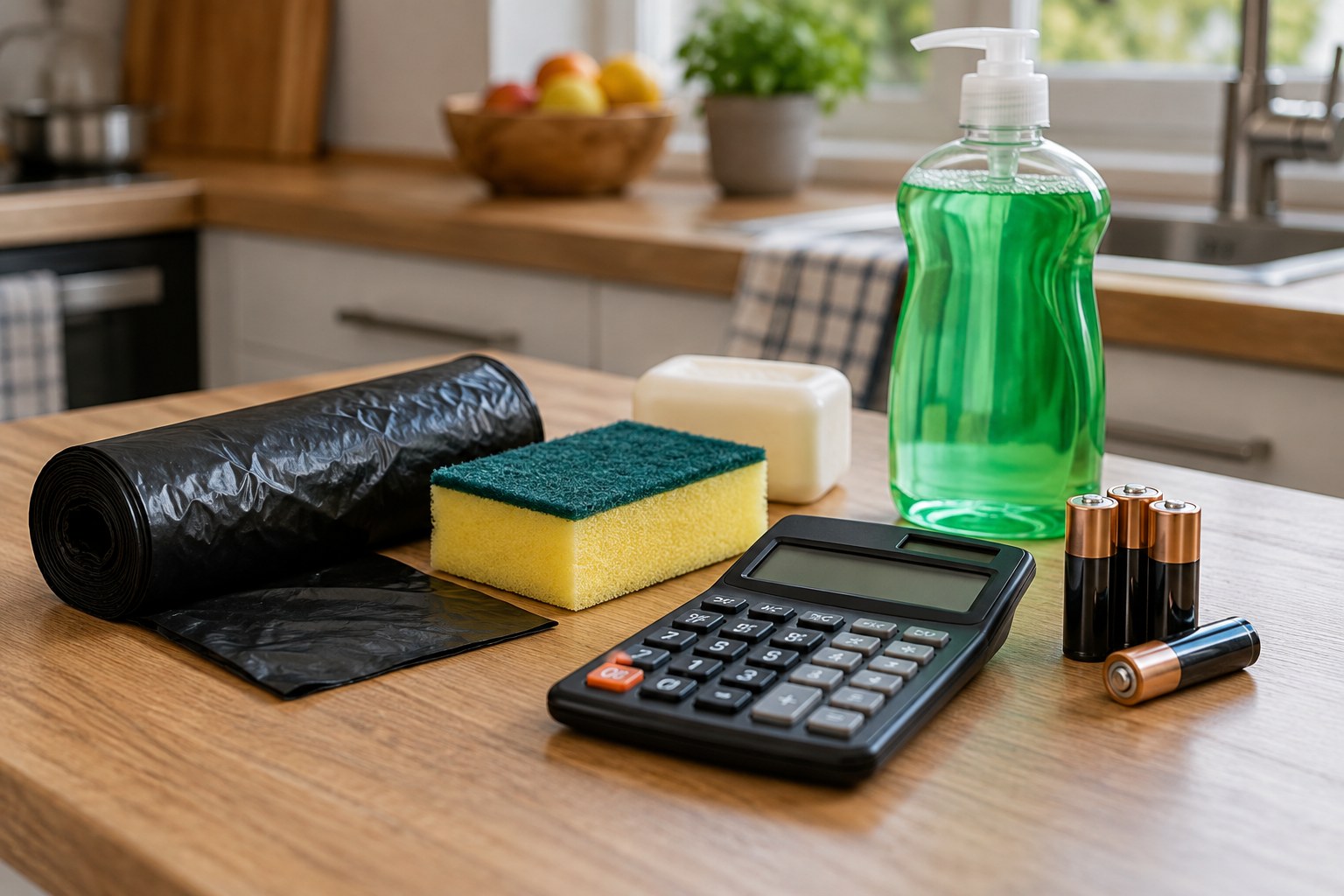
Small household purchases are easy to overlook individually. A pack of bags, replacement cleaning pads or more paper is bought when something runs out. Understanding those expenses does not require measuring every household action. A few regularly replaced products, recorded consistently for a manageable period, provide a useful starting point.
Choose products with clear units. One roll, one item or a defined quantity is easier to follow than a vague category such as “bathroom supplies”. Select things used in the ordinary routine. A one-off bulk purchase for visitors is less suitable as the basis for an ongoing estimate.
Purchase date is not consumption date
Record the product, pack quantity, amount paid and purchase date. Add when the pack is opened and finished where that is easy to observe. If several packs remain in the cupboard when a new one is bought, the interval between receipts does not directly reveal consumption.
Separate opening stock from new purchases. Otherwise, a month of stocking up can appear expensive even though the goods will last much longer. Conversely, a month with no purchase can still have normal consumption supplied from existing stock.
A simple table is sufficient. It does not need to be perfect, but uncertainty should remain visible. Mark an estimated usage period as approximate rather than allowing it to become an apparently precise measurement later. Compare similar periods and account for extended absences or additional household members.
Explain differences before reacting
A product running out faster does not necessarily mean the pack has become smaller. It may now serve another task, the dose may have changed or more people may be using it. Check these possibilities before ordering a larger supply.
A new formula or format can also affect the comparison. More contents do not automatically provide the same number of suitable applications. Follow the intended-use information rather than reducing the dose arbitrarily to make the product appear to last longer.
Turn the record into a buying decision
After several replacements, estimate the ordinary replenishment interval. This helps establish a suitable reserve. An occasional item may need no backup, while a frequently used one may justify a single spare. Ease of obtaining another pack also matters.
When assessing a different pack, compare the cost for the same quantity or specified application. Use prices actually paid and identify one-off promotions. A temporary discount should not quietly become the assumption for an entire year's spending.
The record has served its purpose when it answers a concrete question: which pack size fits, when should it be replaced or which accessories create recurring costs? It does not need to continue indefinitely. Repeat the short observation later for new products or an unexplained change in usage.